FUT and FUE Hair Transplant Techniques
FUT and FUE Hair Transplant Techniques
Hair transplant surgery continues to evolve with groundbreaking technology and improved results. Recently, the president of the International Society of Hair Restoration Surgery (ISHRS) published an insightful article comparing Follicular Unit Transplantation (FUT) and Follicular Unit Extraction (FUE)—two of the most common and highly effective hair restoration techniques.
So, which hair transplant method is best for you—FUT or FUE? Let’s break it down.
What Is FUT (Follicular Unit Transplantation)?
FUT, often called the "strip method," gained popularity in the 1990s as a major improvement over the outdated “plug” transplants. This method involves removing a thin strip of scalp from the donor area, then microscopically dissecting it into individual follicular units.
We Grow Hair Indy's Exclusive Take on FUT: Multi-Unit Hair Grafting™
At We Grow Hair Indy, we’ve taken FUT to the next level with our trademarked Multi-Unit Hair Grafting™ (MUHG) procedure. This method allows us to:
- Transplant up to 3x more hair in a single session
- Deliver up to 2x more density than standard FUT or FUE techniques
- Offer the best solution for patients with large areas of hair loss
Despite concerns about scarring with FUT, MUHG uses advanced suture techniques that result in a pencil-thin, often undetectable suture line—a major improvement over traditional FUT procedures.
What Is FUE (Follicular Unit Extraction)?
FUE hair transplants emerged in the early 2000s as a minimally invasive alternative to FUT. Instead of removing a strip of scalp, FUE extracts individual follicles from the donor area—leaving tiny dot scars that are less noticeable.
Robotic vs. Manual FUE: Why ARTAS Robotic FUE Stands Out
At PAI Medical Group, we offer the ARTAS Robotic FUE system—one of the most advanced hair restoration technologies available today.
- Uses AI-powered digital imaging and a stereoscopic vision system
- Adjusts 50x per second for real-time precision
- Minimizes transection rates to protect each follicle
- Eliminates fatigue and human error during graft harvesting
This cutting-edge technology is ideal for patients with smaller areas of hair loss seeking natural-looking results and minimal downtime.
FUT vs. FUE: Which Hair Transplant Is Right for You?
Both Multi-Unit Hair Grafting™ (FUT) and ARTAS Robotic FUE offer excellent results using your own permanent, genetically resistant hair. Once transplanted, the hair continues to grow naturally and can last a lifetime.
When to Choose FUT:
- You need maximum density in one session
- You have extensive hair loss (Class 5 or higher)
- You’re comfortable with a minimal linear scar that’s well hidden
When to Choose FUE:
- You prefer no visible linear scar
- You have smaller balding areas
- You want quicker recovery with less post-op restriction
The ISHRS article suggests that FUT may be making a comeback due to its ability to produce higher density results. While FUE was once thought to replace FUT entirely, more hair restoration specialists are realizing that FUT still delivers superior volume in a single session.
Post-Procedure Support: Laser Hair Therapy for Enhanced Results
Regardless of the procedure you choose, laser hair therapy plays a crucial role in post-transplant recovery and hair growth stimulation. Whether done in-clinic or at home, laser therapy can improve hair strength, thickness, and vitality.
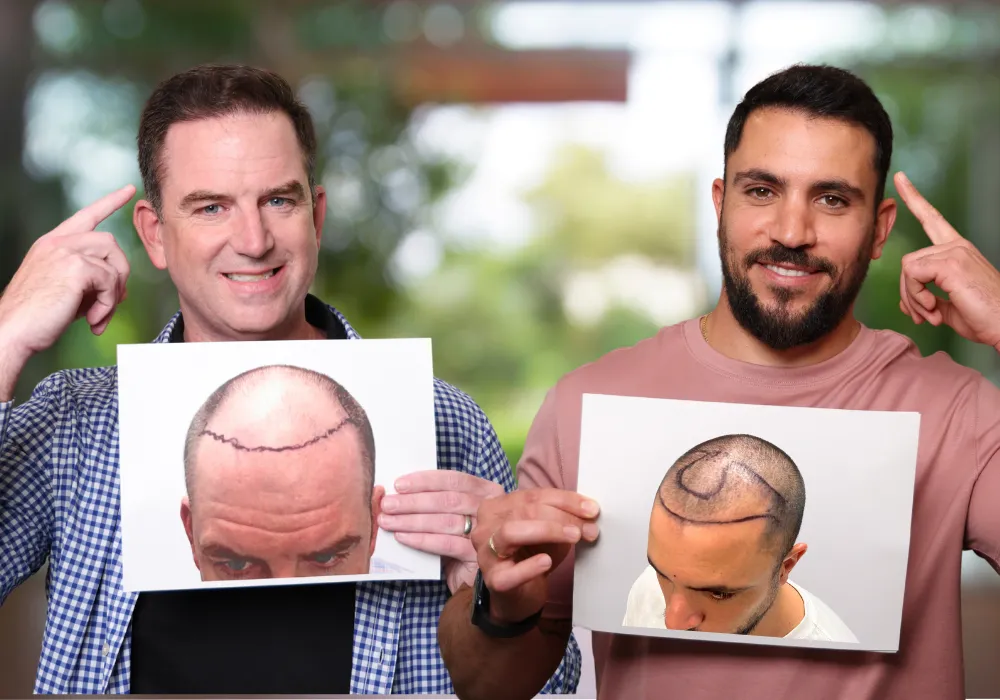
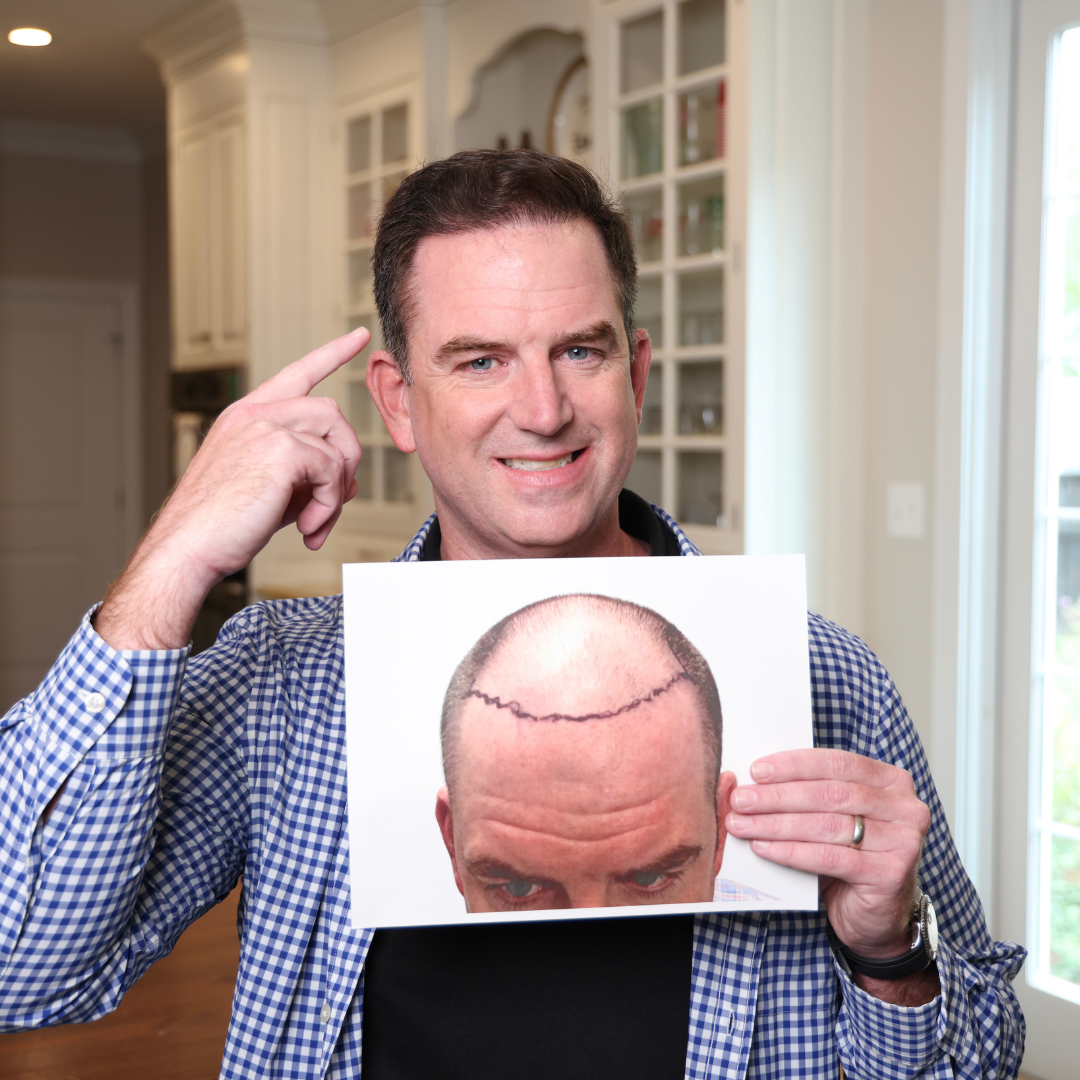
Want to learn more about FUE vs. FUT hair transplants? Our experts sat down to discuss these differences and more, as well as why they chose the techniques for their own hair transplants.
Watch our podcast To the Root, or listen on Spotify to learn more!
Ready to find out which hair restoration option is best for you? Fill out the form below for a free quote and evaluation!