Top 5 Questions about Hair Transplants
Top 5 Questions about Hair Transplants
If you’re considering a hair transplant, you probably have questions—and that’s a good thing. Whether you’re worried about pain, downtime, or how natural it will look, you’re not alone. Below, we’ve answered the top five most frequently asked questions about hair restoration based on real patient experiences and expert input from the professionals at We Grow Hair Indy.
1. Does a Hair Transplant Hurt?
The short answer: Not really.
Modern hair transplant procedures, especially with advancements in pain management, are designed to be comfortable. Unlike older techniques, today’s procedures involve:
- Mild sedatives to help calm pre-procedure nerves
- Local anesthesia in the treated area to ensure you don’t feel anything during the transplant
Most patients report little to no discomfort during the procedure. Some mild sensitivity in the donor area may occur later that evening, but it's usually manageable with over-the-counter medication. For added comfort, a prescription pain reliever is often provided—but many don’t even need it.
In short: The experience is far more comfortable than people expect.
2. How Soon Can I Go Back to Work After a Hair Transplant?
You may be surprised by how quickly most people return to work—typically within 1 to 3 days. Hear from Kevin Bowen about how he went back to work within 2 days of his FUE hair transplant.
The recovery time can vary depending on your profession. If you work a desk job or something non-strenuous, you could be back almost immediately. If your work involves heavy lifting, intense physical activity, or sweating, you may need more time off.
Hair styling techniques to conceal signs of the procedure are also discussed during your consultation to help you return with confidence.
Pro Tip: Avoid strenuous workouts for the first 10–14 days to ensure your grafts heal properly.
3. How Natural Will My Results Look?
Extremely natural—if done right.
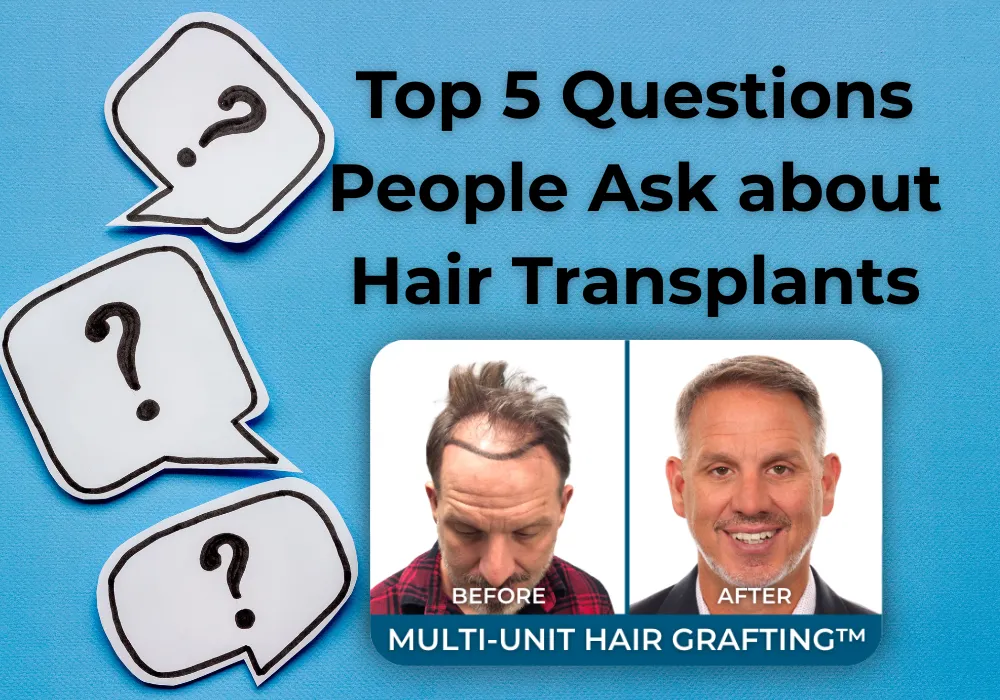
Thanks to advanced techniques like Multi-Unit Hair Grafting™, gone are the days of the “plugged” or “corn row” look. Today, results are customized to your:
- Hair type
- Hairline shape
- Growth patterns
- Personal goals
At We Grow Hair Indy, the use of multiple graft types in one session helps create density and realism. Every detail is tailored to make sure your new hair looks like it’s always been there.
Bottom line: No one will know—unless you tell them.


4. Are the Results Permanent?
Yes—for most people, hair transplant results are permanent.
Why? Because the hair used in the transplant typically comes from the back or sides of your head—areas that are naturally resistant to DHT (the hormone that causes most hair loss). Once transplanted, this hair keeps its resistance and continues to grow normally.
As long as you’re a qualified candidate, your new hair is here to stay.
5. What Are the Benefits of Multi-Unit Hair Grafting™ at We Grow Hair Indy?
Multi-Unit Hair Grafting™ (MUHG) is a cutting-edge procedure that offers more hair per session, higher survival rates, and better overall coverage than traditional methods like Follicular Unit Grafting (FUG).
Key Advantages of MUHG:
- More hair volume in fewer sessions
- Less graft loss due to minimized damage during harvesting
- Better cost-effectiveness for the patient
- Fewer hairs lost in the Telogen (resting) phase
- Faster and fuller final results
Traditional Follicular Unit techniques often result in a higher rate of hair bulb transection (damage), which reduces final density. MUHG avoids this by preserving more viable follicles—resulting in fuller, more natural-looking hair in less time.
It’s simple: MUHG means more hair, better survival, and a stronger outcome. It’s one reason patients across the country trust We Grow Hair Indy.
Hear more FAQs answered on our podcast, To the Root!